Berkeley Orthopedic Dog Bed: UK Raised & Tested
By Mina Okoro • 10th May
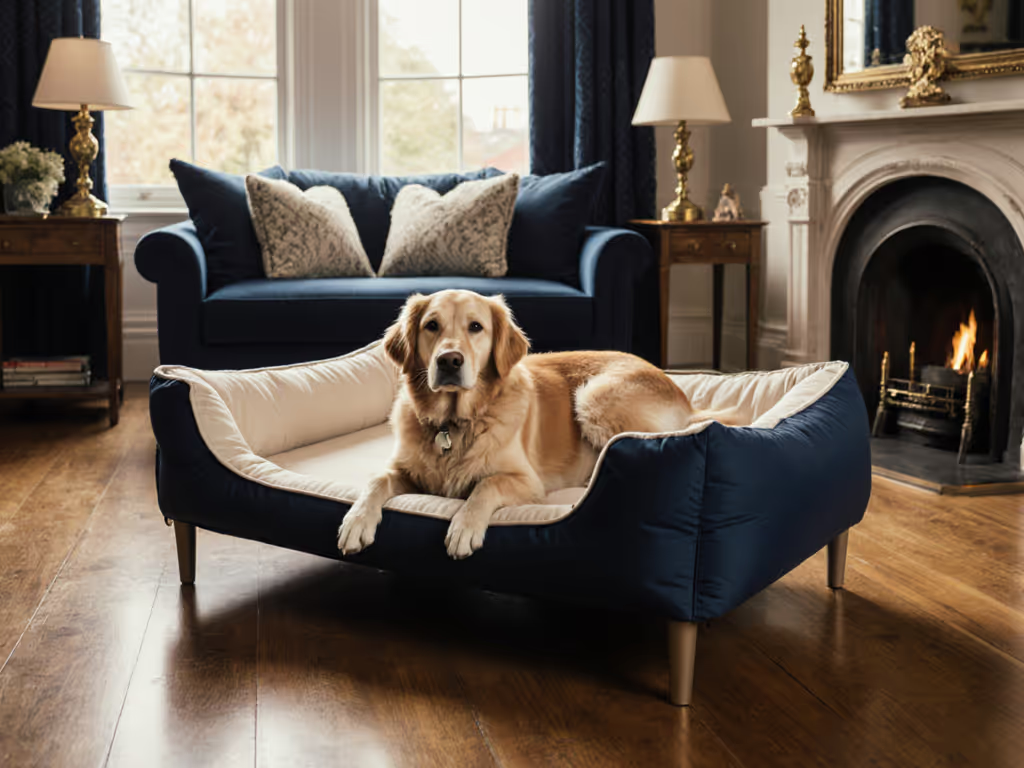
Raised orthopedic dog beds aren't a luxury; they're a biomechanical choice. When you elevate your dog's sleep surface off hard flooring, you're already addressing insulation, airflow, and joint relief. For a field-tested look at pros and cons, see our elevated vs traditional dog beds comparison. But not all elevated beds deliver on support, and not all support is built the same way. Real comfort starts with alignment, then temperature and texture follow. A raised orthopedic dog bed that truly earns its name matches your dog's sleeping posture, body weight, and your climate, all while lasting years, not months.
If you've noticed your dog avoiding their bed, waking stiffly, or struggling to settle in warmer months, the problem often isn't softness; it's alignment mismatch. This guide walks you through choosing a raised orthopedic dog bed that works, using UK-made engineering and pressure-distribution science as your framework.
Step 1: Identify Your Dog's Sleep Style and Body Demands
Before any mattress or material, ask yourself: How does your dog sleep? Start with our dog sleeping positions guide to map posture to bed type.
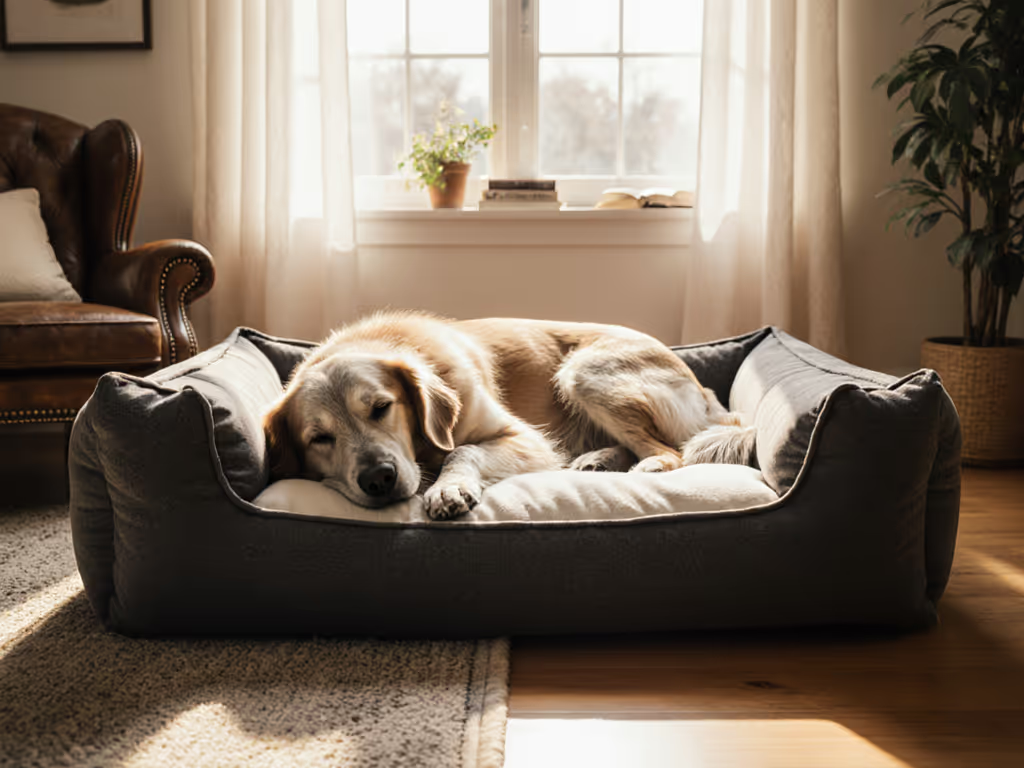
Curlers tuck their legs and spine into a compact, self-hugging position. They need bolstered sides and gentle-but-firm support that doesn't flatten when compressed, think of a nest that holds its shape.
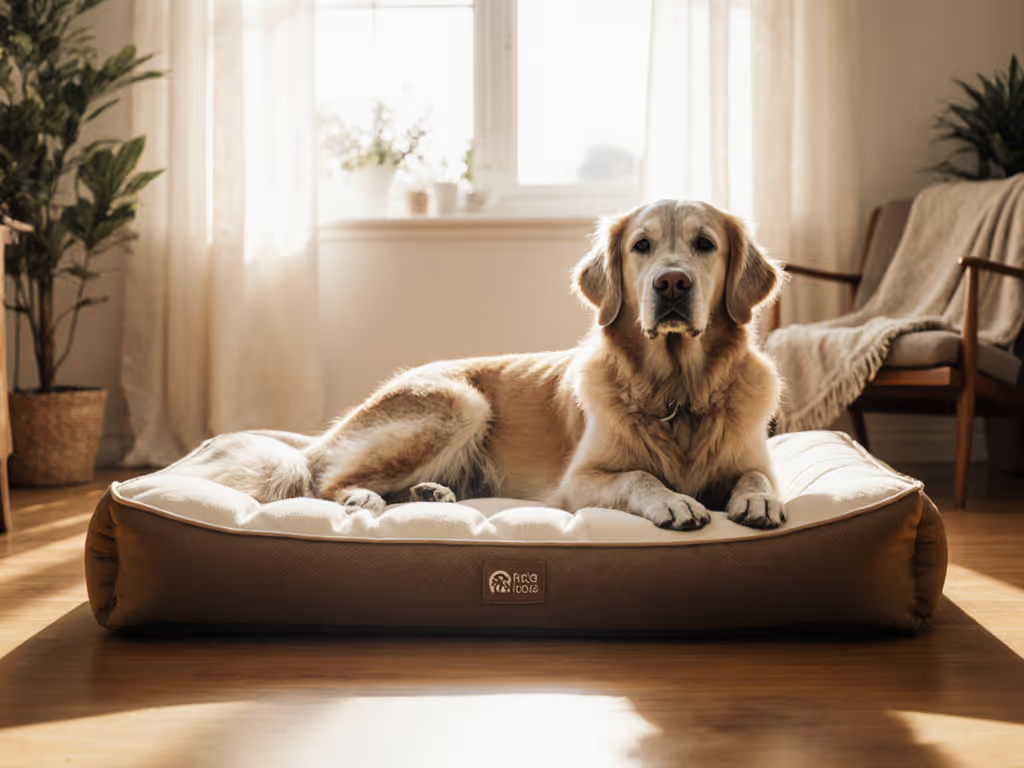
Sprawlers stretch out fully, belly and limbs extended. They need a longer bed with even cushioning across their entire body and a firmer base that prevents their joints from sinking unevenly.
Burrowers dig and nestle, creating small caves. They thrive in beds with slightly raised or enclosed sides that let them push and nest without feeling unsupported.
Leaning sleepers rest against walls, furniture, or bed edges. They need solid, defined edges and a raised rim that provides gentle pressure feedback without being restrictive.
Next, factor in body metrics: weight, age, and any joint history. A 90-pound Labrador and a 10-pound Chihuahua have completely different pressure-point distributions. Larger dogs compress foam more deeply, so they demand denser cores to prevent bottoming out. Seniors and dogs with prior injury need firmer, more supportive bases, not softer ones. (A common mistake is conflating softness with comfort; softness alone can leave joints feeling unsupported.)
Real comfort starts with alignment, then temperature and texture follow.
Step 2: Understand "Raised Orthopedic" in Practice
A bed marked "orthopedic" should meet specific functional criteria, not just marketing language.
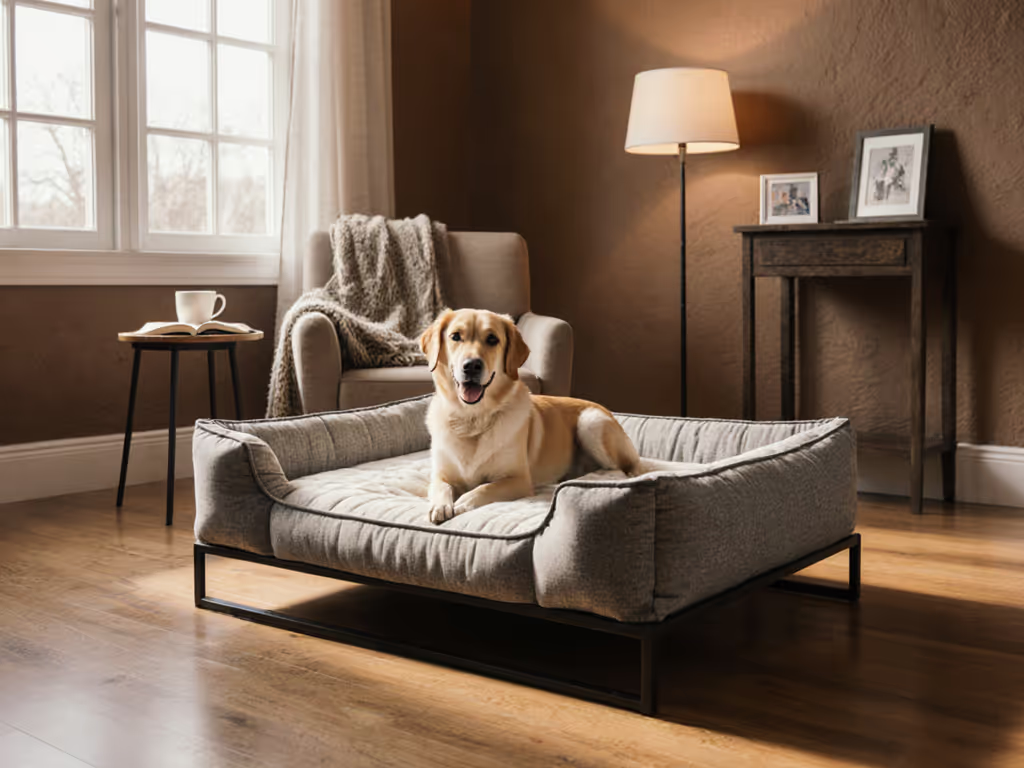
Elevation and airflow: A raised frame lifts your dog off cold tile, concrete, or drafty hardwood. This alone improves insulation and temperature control. The height matters (typically 4-8 inches) and should allow your dog to hop on without straining (a factor for seniors and smaller dogs).
Support core: Orthopedic mattresses use high-density foam or specialized materials designed to distribute body weight evenly and resist compression over time. Lower-density foam (around 1.0-1.5 lbs/ft³) flattens quickly and loses edge support within months. Quality orthopedic cores sit in the 2.0-3.0 lbs/ft³ range, maintaining loft and cushioning through years of use. Not sure which density your dog needs? Use our foam density by weight guide to avoid flattening. UK manufacturers, bound by stricter material standards, often prioritize loft retention (a fact confirmed by long-term durability testing in real homes).
Pressure-point relief: Dogs don't have evenly distributed body weight when resting. Shoulders, hips, and the spine take disproportionate load. A true orthopedic bed uses contouring or multi-layer construction to cushion these points while keeping the spine neutral and aligned.
Step 3: Evaluate Temperature Regulation - The Often-Overlooked Factor
Alignment matters; so does temperature. A perfectly supportive bed that traps heat becomes a source of nighttime restlessness, especially in warm climates or for breeds prone to overheating.
Breathable covers: Fabrics that allow airflow prevent moisture and heat buildup. Look for 100% cotton or cotton-blend covers; these wick moisture and resist odor retention better than synthetic blends. A mattress dog bed with a breathable cover avoids the off-gassing smell and keeps the sleep surface cooler.
Foam ventilation: Some manufacturers infuse cooling gel or use open-cell foam structures that promote airflow through the mattress itself. This is especially important for larger dogs or those in warm regions. UK-made orthopedic beds often incorporate ventilation channels or proprietary foam matrices that maintain support without heat trapping.
Washability and air-drying: If a cover can't dry quickly, moisture lingers, creating odor and mildew. A non-toxic dog bed with machine-washable, quick-dry covers means you're not choosing between hygiene and temperature comfort.
Step 4: Check Durability Against Real-World Wear
A bed that collapses after one year isn't orthopedic; it's expensive waste. Durability rests on three factors: foam density and compression resistance, fabric tear-resistance, and base stability.
Foam compression testing: Quality mattresses maintain 90% of their original loft after 10,000 compression cycles (roughly equivalent to 2-3 years of daily use). Some manufacturers, particularly those in the UK, publish these metrics transparently. Ask for it; if a company doesn't track or share loft retention, that's a red flag.
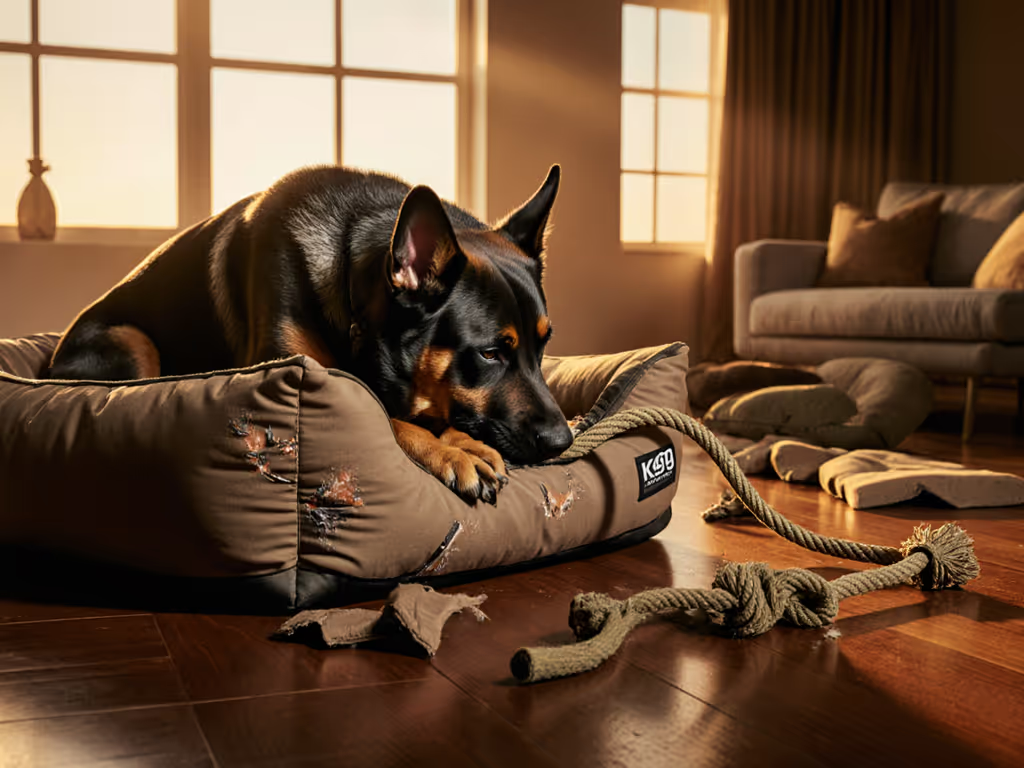
Fabric durability: Look for double-stitched seams, reinforced stress points (corners, zipper ends), and fabrics rated for pet use. Polypropylene and canvas-weave covers resist snags and claw marks better than soft fleece, which pills easily. Testing in real homes reveals what lab conditions miss, and homes with active dogs (or destructive chewers) are the true durability test.
Base and non-slip features: A bed that slides across hardwood isn't just inconvenient; it's unsafe. Non-slip feet or rubber pads prevent shifting and reduce the annoying crinkle or scrape noise. Raised frames should be sturdy enough that flex or wobble isn't noticeable when your dog hops on or shifts their weight.
{{GENERIC_IMAGE(dog sleep posture comparison support alignment)}}
Step 5: Verify Sizing and Spatial Fit
Many raised orthopedic beds fail not because of material but because they don't fit the space or dog correctly.
Bed-to-dog ratio: Your dog should fit fully stretched with a few inches of margin on all sides, not edge-to-edge. Undersizing forces cramped positions; oversizing wastes space in small rooms. Measure your dog from nose to tail base, then add 6-12 inches for comfort. Double-check with our how to measure your dog for a bed guide so you don't under- or oversize.
Room layout: Will the bed sit in a corner, crate, or open floor? Corner placement can feel cozier for anxious dogs but limits sprawling. Crate-fit beds need exact dimensions, a bolster that extends 2 inches too far makes insertion awkward or impossible. Open-floor placement allows full sprawl but may clash with décor or traffic flow.
Bolster depth: Bolstered sides (raised edges for leaning or nesting) reduce usable surface area. A bed labeled "Large" with deep bolsters might fit fewer stretched-out sleepers than a "Large" flat design. Ask about interior dimensions, not just overall size.
Accessibility: For senior dogs or those with mobility issues, bed height and edge definition matter. Too low and they struggle to hop off; too high and impact strain increases. A raised frame (4-6 inches) strikes the balance for most dogs over 7 or 8 years old.
Step 6: Why UK-Made Matters - Standards, Transparency, and Longevity
A UK-made dog bed isn't a guarantee of superiority, but it reflects certain structural advantages worth noting.
Material sourcing and certification: UK manufacturers face stricter regulations on foam formulation, off-gassing limits, and fabric treatments. Many use CertiPUR-US certified or OEKO-TEX certified foams and dyes, which means they've been tested for harmful chemicals and volatiles. Learn the differences in our OEKO-TEX vs CertiPUR-US comparison. A non-toxic dog bed isn't just marketing; it's measurable compliance.
Handcrafted consistency: Beds made in the UK often follow smaller production runs, allowing quality control at each stage. Mass-produced beds (even orthopedic claims) can have variable foam density, cover stitching, or base stability batch-to-batch. When a manufacturer states that beds are handmade and locally produced, they're inherently limiting volume and prioritizing consistency.
Warranty and support infrastructure: UK brands typically offer straightforward warranty terms (often 2-5 years) and local customer support. Returns and cover replacements are managed within the country, not routed through overseas logistics. This speeds resolution and signals confidence in durability.
Replaceable parts: The most sustainable raised orthopedic bed offers replaceable covers and liners. If your cover stains or wears, buying a new one costs £30-80, not £300-500 for a new bed. Brands that sell these components assume long bed life; those that don't may design for shorter ownership cycles.
{{GENERIC_IMAGE(orthopedic mattress cross-section foam density support layers)}}
Step 7: Comparing Material Claims and Real-World Performance
When reviewing a raised orthopedic dog bed, separate marketing from measurable performance.
Memory foam vs. high-density foam: Memory foam conforms to body shape, useful for pressure relief, but often traps heat and can off-gas for weeks after purchase. High-density polyurethane foam (2.5+ lbs/ft³) doesn't conform as dramatically but maintains its shape, resists compression, and stays cooler. Neither is inherently better, but high-density foam suits dogs in warm climates or those prone to overheating.
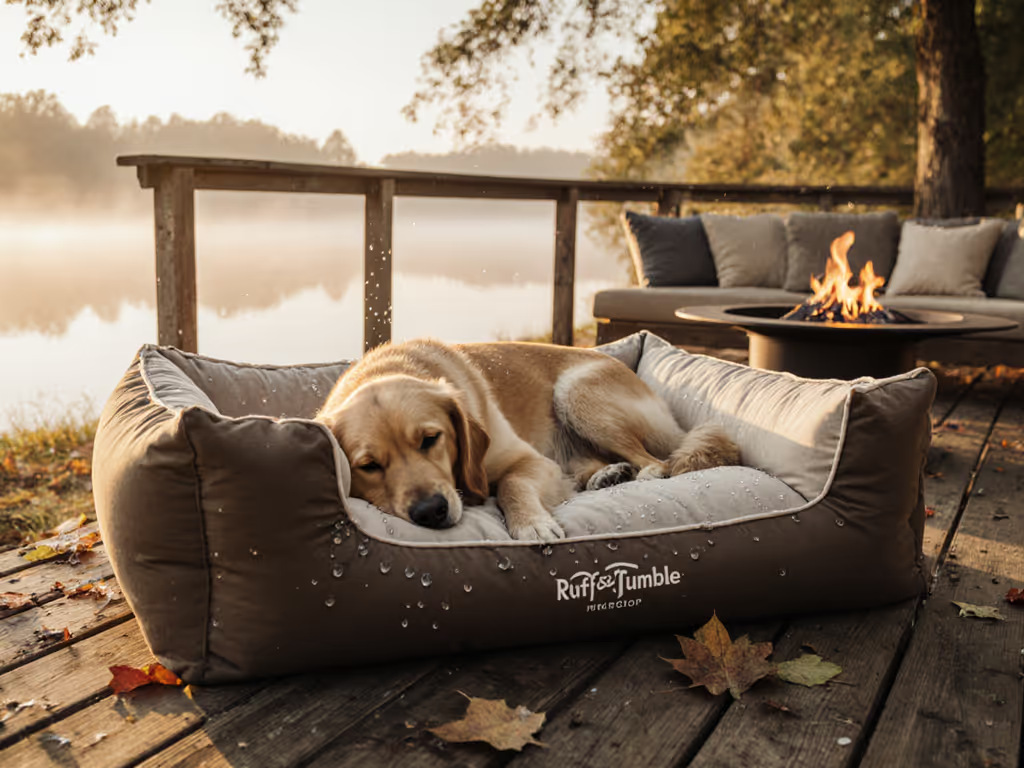
Waterproof liners: These are essential if your dog is incontinent, prone to accidents, or lives in a damp climate. A truly waterproof liner sits between the foam and cover, protecting the core while remaining breathable. A cover described as water-resistant may repel surface spills but won't contain sustained moisture, different function, different value.
Fill materials: Avoid beds stuffed with recycled polyester batting or low-grade fill. These compress, clump, and lose volume within months. Certified, virgin polyurethane foam or gel-infused variants offer better loft retention and pressure distribution.
Allergy considerations: If your dog has skin sensitivities or allergies to dust mites or dander, a washable, quick-drying cover is non-negotiable. Beds with hypoallergenic fill materials and covers designed for frequent washing reduce allergen accumulation compared to static, rarely-washed designs.
Step 8: Making Your Final Decision - Actionable Next Steps
Choosing the right raised orthopedic dog bed is a deliberate process, not an impulse buy. Here's how to move forward:
1. Document your dog's sleep style and metrics: Take video of your dog sleeping in their current bed or on the floor for 30 seconds. Note their position (curled, sprawled, leaning, burrowing). Measure length, weight, and age.
2. List your climate and space constraints: Is your home consistently warm, cold, or variable? Do you have hardwood, tile, or carpet? Will the bed sit in a corner, open floor, or crate? Will you need easy washing and quick-drying capability?
3. Request material specifications and test data: From shortlisted manufacturers (like UK-made providers), ask for:
- Foam density (lbs/ft³) and loft-retention testing (% after 10,000 cycles)
- Cover fabric content and pilling/snag resistance data
- Warranty length and what's covered
- Availability of replacement covers or waterproof liners
- Wash and dry-time instructions with real-world timelines
4. Cross-reference user experience: Read reviews from verified purchasers focusing on edge support after 1-2 years, washing durability, and whether dogs actually use the bed. Ignore vague praise ("My dog loves it") and prioritize specifics ("The cover shrank after one wash" or "The bolster flattened after 8 months").
5. Confirm sizing and exchange policy: Before purchasing, confirm the exact interior dimensions and check them against your dog's stretched length plus margin. Ensure the seller offers easy exchanges if size doesn't fit your space or dog. Shipping oversized beds is costly; get it right the first time.
6. Plan for long-term ownership: When you place an order, also check whether replacement covers or waterproof liners are available for purchase. A bed that lasts 5 years with a $50 cover replacement every 2-3 years costs far less over time than beds replaced every 1-2 years. Calculate total cost of ownership, not just upfront price.
7. Test for off-gassing and temperature in your home: When the bed arrives, air it in a well-ventilated space for 24-48 hours (outdoor if possible). If odor lingers beyond this, off-gassing is likely and suggests lower-grade foam. Once settled, observe your dog's sleep patterns over two weeks, do they use it consistently? Are they cooler in summer, or do they avoid it? Real-world behavior is your final validation.
The Alignment-First Approach
You've likely noticed a thread through this guide: alignment and matching your dog's needs come before luxury labels or price. A mid-range, UK-made raised orthopedic bed chosen with intention will outperform a premium generic mattress dog bed that ignores sleep style, temperature, or durability factors.
I learned this firsthand. Years ago, I fostered a 12-year-old shepherd mix whose previous bed was plush but flat, he woke stiff every morning. When I paired his side-sleeper curl with a medium-firm foam and bolstered edges that kept him cooler and supported his spine, the shift was immediate. He rose without hesitation. That moment crystallized what I now bring to every bed choice: softness without support is just expensive sadness. The right bed, one that understands posture, materials, and care, is quietly transformative.
Your dog doesn't need a luxury bed; they need their bed. A raised orthopedic design, UK-tested and built to last, paired with your dog's unique sleep style and your home's climate, isn't an indulgence. It's precision comfort. The steps above translate that principle into action. Move through them methodically, ask hard questions, and you'll find a bed your dog won't ignore, one they'll genuinely prefer, night after night.
Related Articles