Dog Bed Size Chart: How to Measure Your Dog
By Priya Nandakumar • 31st Mar
Finding the right dog bed size chart and learning how to measure your dog for bed might seem straightforward, but it's one of those decisions that shapes years of sleep quality, and ultimately, your dog's health and your wallet. Too often, pet parents buy a bed based on breed alone or guess at dimensions, only to watch their dog avoid it or the foam crater within a year. But here's what I've learned tracking true cost-of-ownership: sizing done right the first time, paired with a durable design and a removable cover you can actually wash, means a bed that earns its place in your home for three to five years, not three to five months. Value is lifespan, not list price.
Let me walk you through the questions that matter: the ones that separate a bed your dog loves from one that becomes expensive landfill.
Why Does Bed Size Matter More Than You Think?
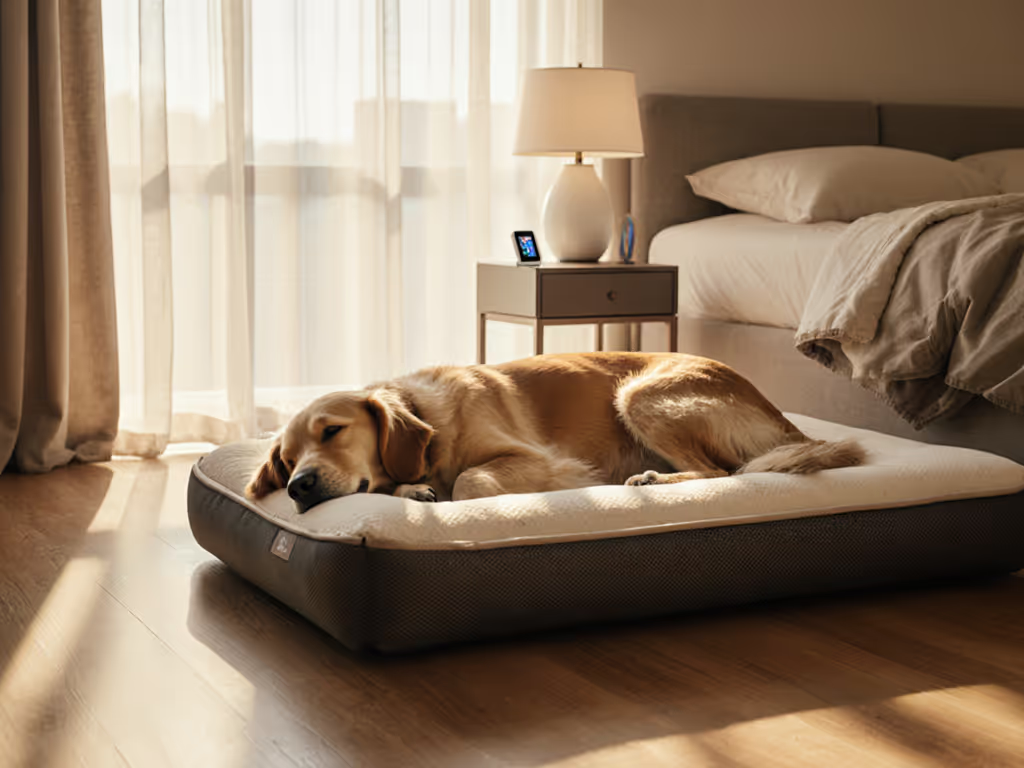
A dog bed that's too small forces your pet into a curled position even when they want to stretch, spiking stress hormones and reducing deep sleep. One that's too large wastes floor space and may feel unstable. Some dogs avoid beds that don't cradle them. Even worse, undersized beds are often the first to flatten at the edges and wear unevenly because your dog's weight concentrates on a smaller surface area, compressing foam faster.
That instability factor is real. I've seen dogs abandon beds simply because the bolster felt wobbly or the mattress shifted. A properly fitted bed (one that gives your dog 6-12 inches of buffer room beyond their nose-to-tail length) does double duty: it feels secure and it distributes pressure more evenly across the foam core, slowing the degradation that costs you a replacement cycle.
How Do You Actually Measure Your Dog?
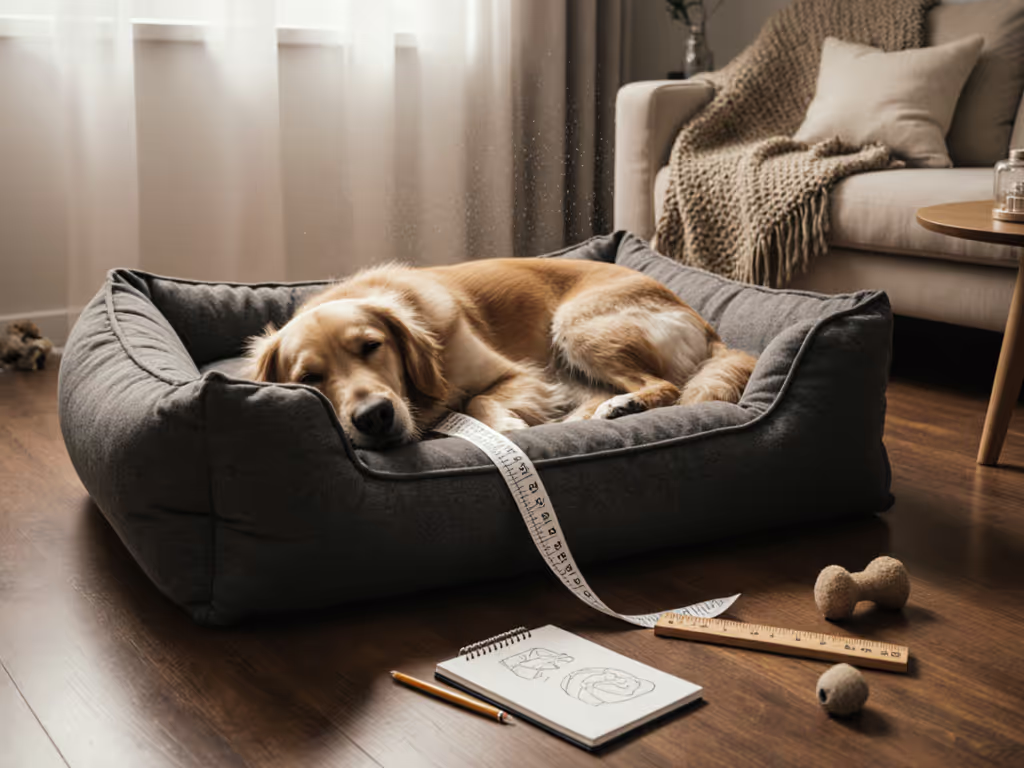
This is where precision matters. Don't eyeball it. If you want a printable worksheet and extra tips, see our step-by-step measuring guide.
Step 1: Choose a Relaxed Position
Wait until your dog is lying flat and fully relaxed (ideally on their side). A sleepy dog is an honest dog. Avoid measuring a tense or standing pup, as they'll shift posture the moment the measuring tape appears.
Step 2: Measure Nose to Tail Base
Using a soft measuring tape, run it from the very tip of your dog's nose to the base of their tail, not the tip of the tail itself. Many people add extra inches for tail length and end up with a bed that's awkwardly oversized. The tail hangs off or curls; you're paying for space your dog doesn't use.
Write this number down. This is your baseline.
Step 3: Measure Shoulder Width
Have your dog lie down again, and measure across the widest part of their shoulders. This tells you the bed's width must accommodate their torso comfortably.
Step 4: Optional - Height for Cave or Hooded Beds
If you're considering a bed with high walls or a cave design, measure from your dog's paw to the top of their shoulder. This ensures the entrance isn't cramped and the walls don't feel oppressive.
What's the Formula for Bed Size?
Once you have your dog's nose-to-tail length, add buffer room based on weight and sleep style:
- Small dogs (up to 20 lbs): Add 6-8 inches to length and width
- Medium dogs (20-50 lbs): Add 8-10 inches to length and width
- Large dogs (50-90 lbs): Add 10-12 inches to length and width
- Giant dogs (90+ lbs): Add 12+ inches to length and width
For a concrete example: if your 60-pound Labrador measures 28 inches nose-to-tail and 16 inches across the shoulders, add 10 inches to each. You're looking for a bed roughly 38 inches long and 26 inches wide.
If your dog falls between size categories, always round up. Dogs rarely complain about beds that are too spacious, but they'll avoid one that crowds them.
Why the buffer room? It allows your dog to shift positions, stretch, curl, and lean against the bolster without hanging off the edge. That edge support is crucial for durability. A dog pressed against the edge night after night will crush that bolster faster than one who has room to shift weight around.
How Do Sleep Styles Change the Equation?
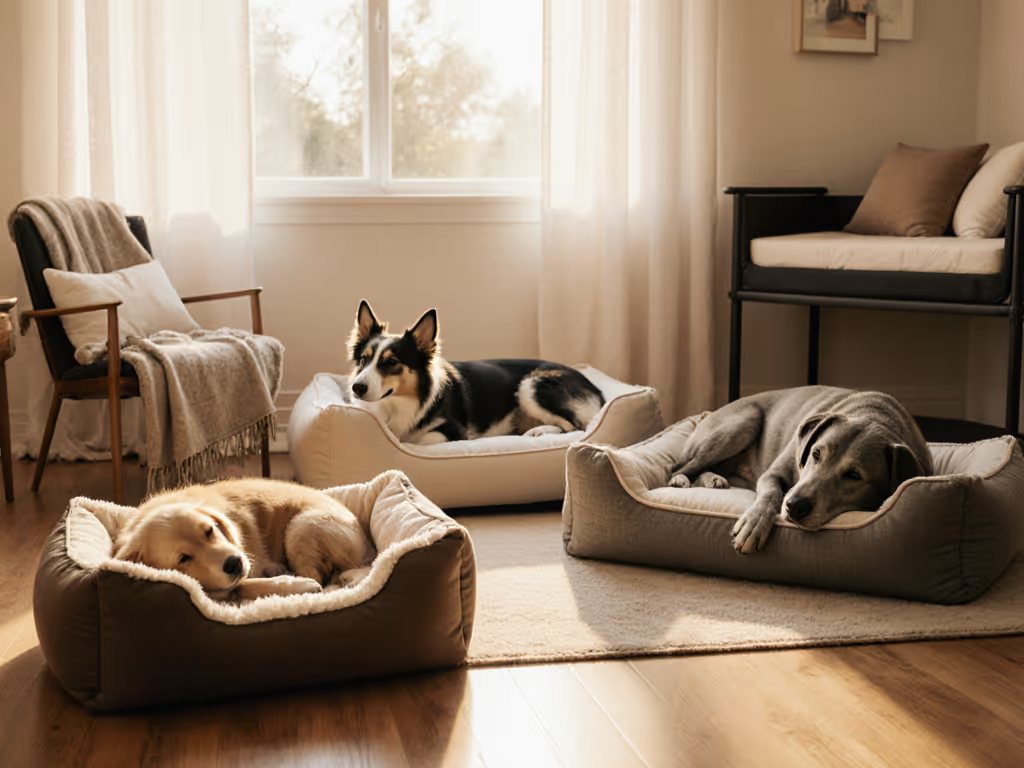
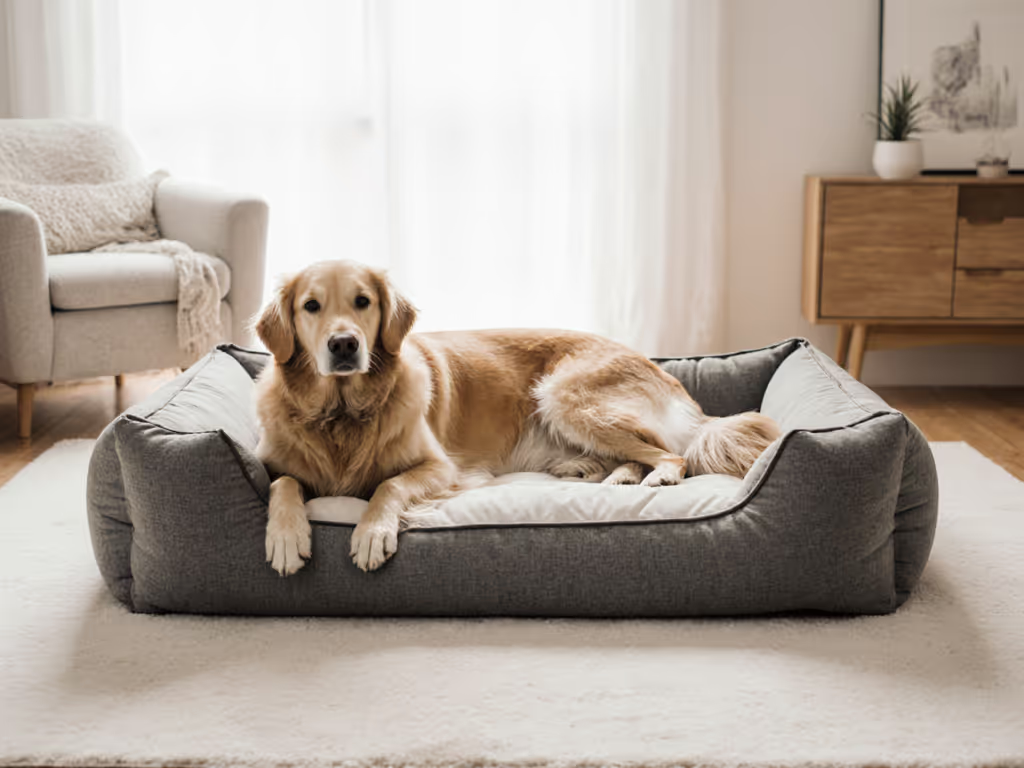
Not all dogs sleep the same way. A sprawler needs more bed length than a curler. This is where feeding into a generic size chart fails.
Sprawlers (often larger breeds and younger dogs) stretch out fully, limbs extended. They need every inch of the length formula, sometimes more.
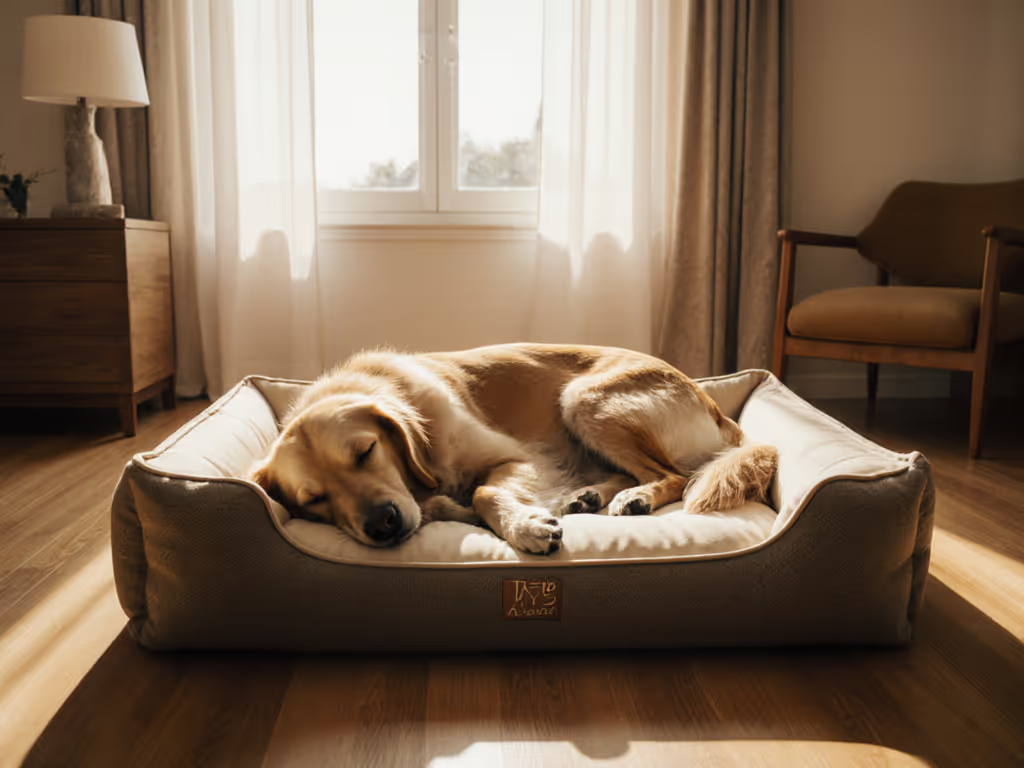
Curlers naturally tuck their paws and fold into themselves. They'll be comfortable in a smaller bed, but don't mistake comfort for ideal. A larger bed still gives them choice and reduces surface pressure.
Leaners press against the bolster for support. Make sure the bed width is sufficient so they're not leaning on a thin, collapsible edge.
Burrowers dig and nest before settling. They need a bed with a removable cover that can withstand frequent washing, and foam dense enough not to crater under the constant kneading.
If you're unsure of your dog's style, observe them for a few nights on the floor, a couch, or an old blanket. Their instinctive posture tells you the truth. For visual examples and bed matches by posture, see our dog sleeping positions guide.
What About Specific Bed Types?
Different bed styles have different size equations because bolsters and walls eat into usable space.
Flat Beds or Pads (the simplest option) use the full stated dimensions. A 36×28 bed gives you 36×28 of sleep surface.
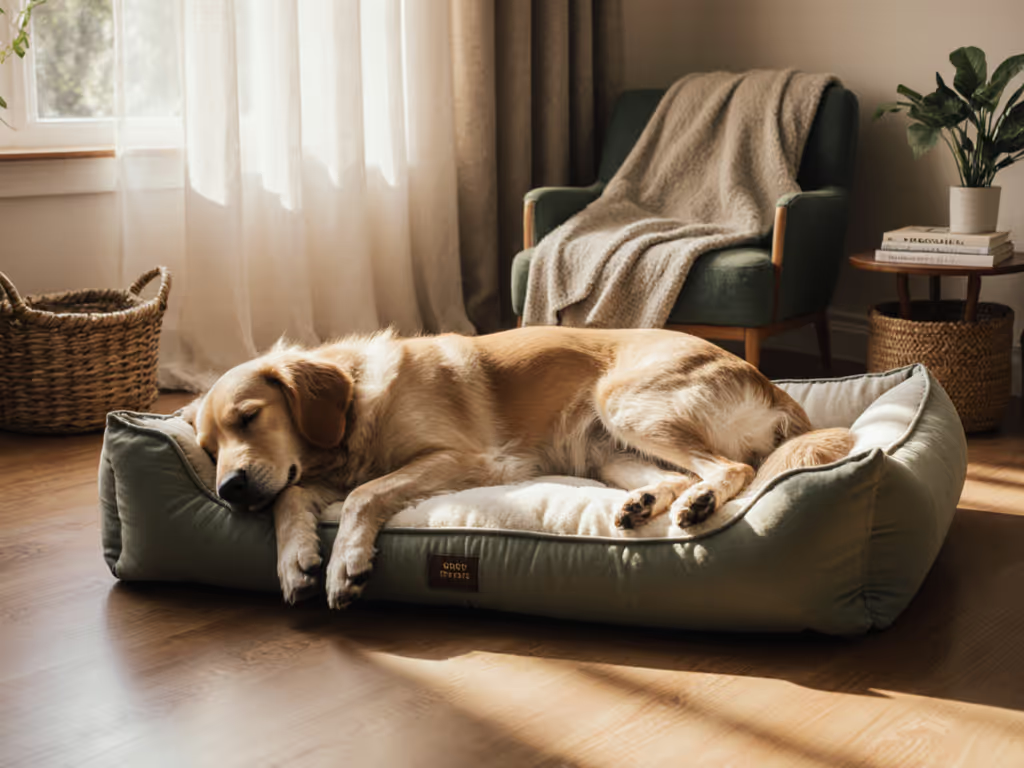
Bolstered Beds (with raised edges) reduce the internal sleeping area. A 36×28 bolstered bed might give you only 30×22 of true lay-down space because the walls take up 2-3 inches on all sides. If you go this route, size up to account for the bolster intrusion. You might need a 42×34 bed to get the 36×28 usable area your dog needs.
Crate-Sized Beds must fit snugly inside your crate without bunching, or they'll slide and shift, making your dog feel unstable. Measure the interior of your crate first, then select a bed sized slightly smaller to allow for foam loft without crowding. For crate-specific sizing trade-offs, compare crate-ready vs standard beds.
Elevated or Platform Beds typically have fixed dimensions and come in S, M, L, XL. Use your nose-to-tail measurement to pick the category, and compare against the internal deck dimensions, not the leg height.
Where Does Durability Fit Into Sizing?
Here's where the longevity angle clicks in: a bed sized too large for your dog's room often gets relegated to a corner or closet and doesn't last because humidity, dust, and pet dander concentrate in stagnant air. A bed sized just right lives in a high-traffic, well-ventilated part of your home. You see it, you maintain it, and the foam doesn't degrade from moisture.
Also, a properly fitted bed distributes your dog's weight evenly, which slows foam compression. Undersized beds concentrate pressure on smaller zones, leading to crater points that collapse way before the rest of the mattress. An undersized bed will flatten in 12-18 months; a properly sized, quality bed with removable covers (which you wash every 2-3 weeks to reduce mite and odor buildup) can deliver 3-5 years of usable life. Get step-by-step care tips in our washable dog bed cleaning guide.
That's not hype. That is a maintenance equation. Spend once, maintain smart, and skip the landfill.
What If Your Dog Is Between Sizes?
Always choose the larger size. Your dog won't reject a spacious bed, but they will avoid a crowded one. The only exception: if your dog has severe mobility issues and needs close bolster support for joint relief. In that case, consult your vet about an orthopedic bed that's sized appropriately but offers supportive edges.
How Do You Future-Proof Your Choice?
Before you buy, ask these questions:
Is the cover removable and truly machine-washable? A bed sized right but saddled with a cover you can't wash will smell and harbor mites by month four. Removable covers extend bed life by 50%. I've seen it in real homes.
Are replacement covers sold separately? If one cover tears or stains badly, can you buy a new cover instead of a whole new bed? This is total-cost-of-ownership thinking.
Is the foam core density listed? Higher-density foams (2.5-3.0 lb per cubic foot for orthopedic beds) resist compression longer than cheap, airy foams. For specific density targets by dog weight, use our memory foam density guide. A bed that's well-sized but filled with fluff will flatten unevenly and fail sooner.
Does the bed have a non-slip base? A properly sized bed that slides around on hardwood every time your dog jumps on or off will feel unstable and shift out of alignment, concentrating wear. A non-slip bottom keeps it anchored.
A Quick Sizing Reference
Here's a consolidated dog bed sizing chart for common scenarios:
| Dog Size | Weight Range | Recommended Bed Length × Width | Example Breeds |
|---|---|---|---|
| Small | Up to 20 lbs | 24" × 18" | Chihuahua, Pomeranian, Shih Tzu |
| Medium | 20-50 lbs | 36" × 28" | Beagle, Corgi, Cocker Spaniel |
| Large | 50-90 lbs | 46" × 34" | Labrador, Golden Retriever, Shepherd |
| Extra Large | 90+ lbs | 54" × 44" | Great Dane, Mastiff |
Important: Use your dog's measured length, not breed, as the primary guide. Individual variation is huge.
Your Next Step: Measure and Document
Don't skip the measurement phase. Grab a soft tape, let your dog relax, and record nose-to-tail, shoulder width, and (if relevant) standing height. Keep those numbers in a notes app or photo on your phone. You'll need them not just for the first bed, but for any future purchase, travel bed, or crate liner.
Once you have measurements, cross-reference them against your candidate bed's internal usable dimensions (not the marketing size on the tag).
Related Articles