
Raised Orthopedic Dog Beds for Arthritic Dogs: Find Your Fit
By Mateo Álvarez • 20th Apr
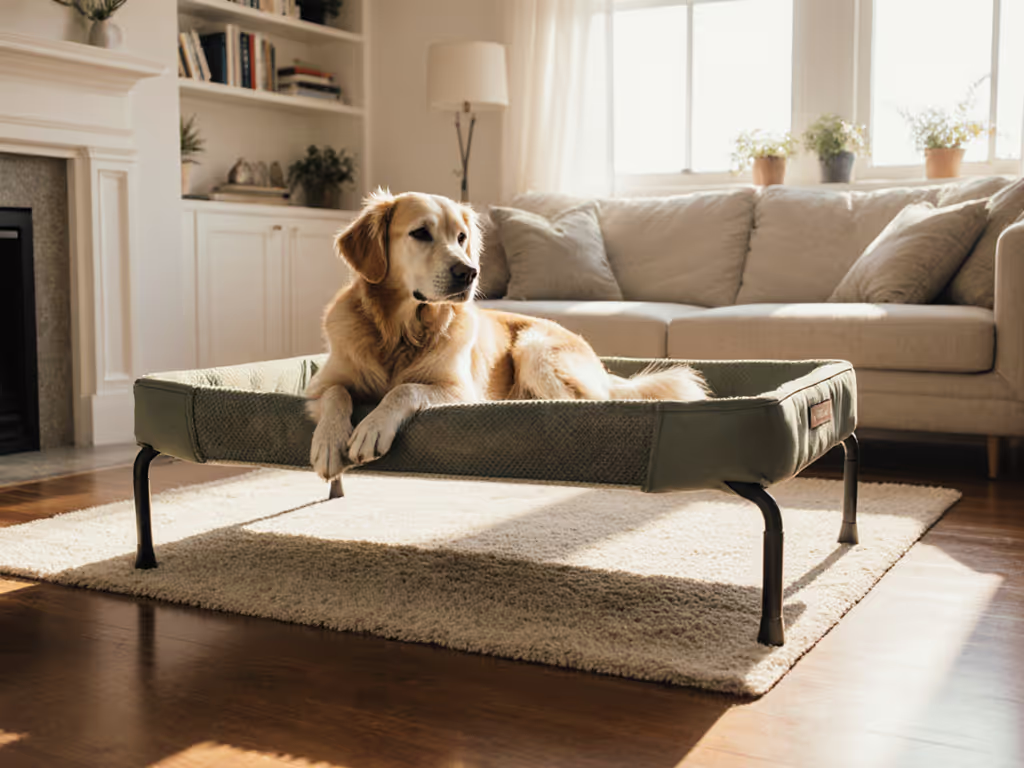
Watching your senior dog struggle to climb into a low bed or wince when settling onto a flat surface is heartbreaking. A raised orthopedic dog bed tailored to your dog's needs can transform their nighttime routine, and their daytime energy. Unlike generic beds, raised orthopedic designs combine elevation, memory foam support, and thoughtful placement to address dog joint health challenges without relying on cumbersome remedies. Better yet, when matched correctly to your home's layout, climate, and your dog's sleep style, these beds often cost less over time and actually get used every night. Below, I answer the questions I hear most often, so you can make a decision with confidence.
FAQ: Your Guide to Raised Orthopedic Beds for Arthritic Dogs
What exactly is a raised orthopedic dog bed, and how does it differ from a regular bed?
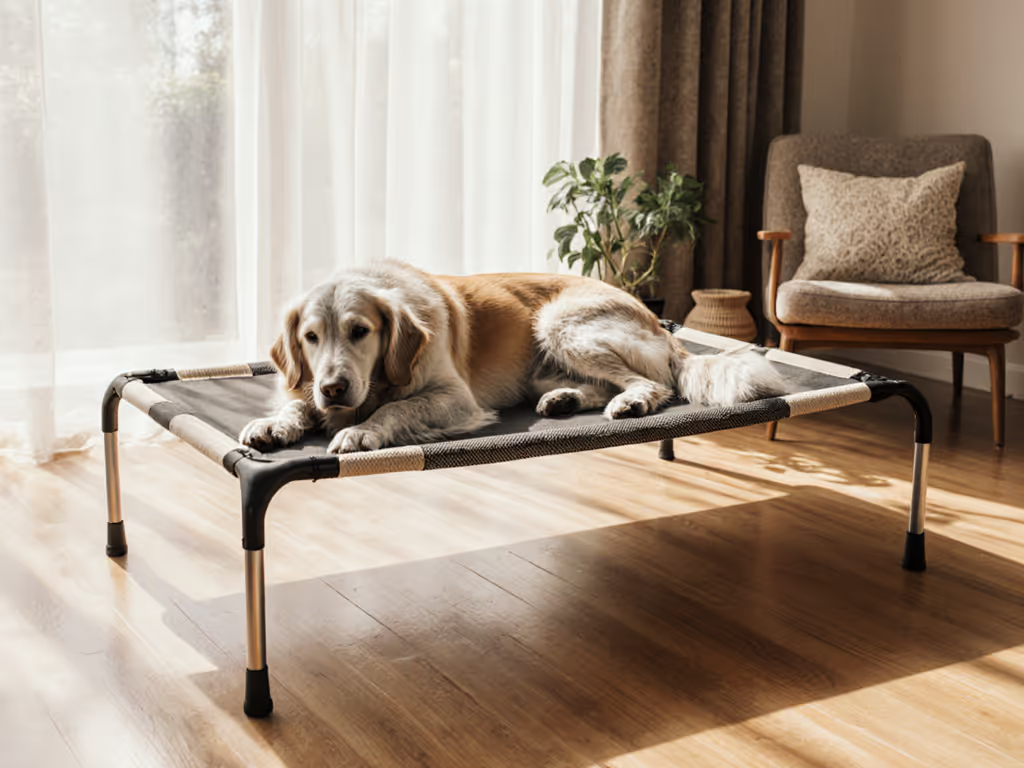
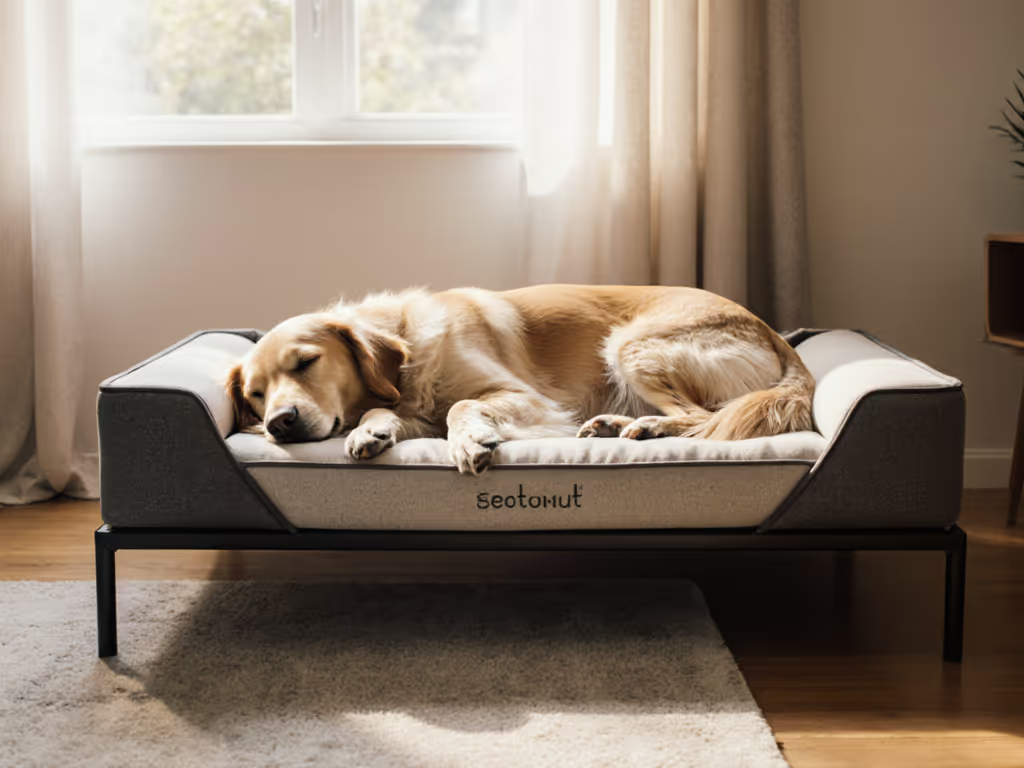
A raised orthopedic dog bed lifts your dog off cold floors or drafty ground while supporting joints and circulation. The "raised" part means the bed sits on legs or a frame (typically 4 to 8 inches high), which improves airflow underneath and makes it easier for arthritic dogs to get in and out.
The "orthopedic" part refers to the foam or fill inside. High-density memory foam (the good stuff) contours to your dog's body weight, reducing pressure on hips, elbows, and shoulders. Unlike cheap foam that flattens in weeks, quality orthopedic foam is engineered to bounce back and hold its shape for years[1][2].
Many beds calling themselves "orthopedic" are simply made with any foam, which doesn't guarantee actual joint relief[5]. Look instead for memory foam dog beds with a clearly stated foam density or specifications that explain how the bed distributes weight evenly[4]. The difference shows up fast: dogs sleeping on real orthopedic memory foam showed 14% longer REM cycles, the deep sleep where healing happens[2].
When is a raised orthopedic bed actually worth the investment?
Here's the honest answer: it depends on your dog and your timeline, but for most senior dogs and large breeds, the return on investment is real.
You'll benefit most if your dog:
- Is 7 years or older (senior dogs are nearly certain to benefit)[2]
- Weighs over 50 pounds (large breeds carry more joint stress)[2]
- Has been diagnosed with arthritis or hip/elbow dysplasia
- Shifts positions frequently at night or struggles to settle[2]
- Is currently on a sagging or flattened bed
The long-term cost story: A cheap $50 bed replaced every 6 months costs $100 per year. A quality $180 bed lasting 5 years costs just $36 per year[1]. Over five years, you'll spend $500 on cheap beds versus $180 on one premium bed, plus you won't be throwing away flattened foam repeatedly. For dogs with senior dog care needs, the math is compelling[1].
For healthy young dogs under 5 with no mobility issues, a standard quality bed may be sufficient. But if you're unsure, ask yourself: Does my dog spend 8+ hours a day sleeping? (Nearly all do.) Could better cushioning reduce restlessness or pain? (Probably.) Then the upgrade pays for itself[1][2].
How do I match a raised orthopedic bed to my dog's specific sleep style and climate?
This is where placement and materials make all the difference, and where most owners stumble.
First, observe your dog's sleep style. Does she curl into a ball? Sprawl across the whole surface? Lean against walls? Burrow into fabric? The bed shape and edge height should match. A sprawler needs a roomy, flat surface; a curler appreciates bolster edges; a leaner benefits from a bed positioned in a corner.
Next, consider your climate and your dog's airflow needs. Here's my core approach: Start simple, fit the climate, reward the rest.
-
Hot climates or dogs that pant: Choose breathable materials: cotton covers, mesh panels, or cooling gel inserts if available. Avoid heavy plush or dense memory foam without ventilation. Placement matters too: position the bed in a shaded corner away from direct sun, near a window with airflow, or where a quiet fan can provide gentle circulation. I worked with a nervous rescue who paced and panted past midnight. We swapped a heat-trapping plush pad for breathable cotton, moved it from a doorway (drafty, unpredictable) to a quiet wall, and paired it with a simple routine. A fan's low hum later, he slept through. Small changes, big relief.
-
Cold climates or chilly dogs: Look for dense memory foam, insulating fabrics, and placement away from drafts. An elevated bed keeps the dog off cold hardwood and allows warm air to move underneath naturally. Avoid corners where cold seeps in.
-
Allergy or sensitivity concerns: Prioritize hypoallergenic fabrics, waterproof liners, and washable covers to reduce dust mite buildup and keep the bed fresh[1]. Breathable materials also discourage mold and musty odors.
Size and placement checklist:
- Measure your dog: nose-to-tail length plus 6 inches Use our dog bed sizing guide to get it right the first time.
- Check the bed's usable interior (bolsters reduce available space)
- Confirm it fits your intended spot (crate, corner, beside your bed)
- Ensure at least 12 inches of clearance on two sides for airflow
- Position away from high-traffic doorways and noise
Will my arthritic dog actually use the bed, or will she ignore it?
Dogs don't automatically love new beds, they need familiarity and positive association. Set realistic expectations, and you'll see success.
The simple onboarding routine:
- Place the bed where your dog already sleeps (if she has a spot) or where she spends quiet time
- Reward any approach or interest with calm praise or a low-value treat (not high-excitement celebrations that make it seem strange)
- Be patient for 1-2 weeks as she explores at her own pace
- Avoid forcing her on, let her choose to lie down
- Once settled, reinforce with routine: feed her breakfast near the bed, let her rest after potty breaks, keep it her calm sanctuary
Don't overpromise overnight transformation. Some dogs settle in days; others take 2-3 weeks. Consistency matters more than speed. Once she trusts the bed, it becomes her refuge, and you'll notice deeper sleep, less restlessness, and more willingness to stay put rather than pacing[6]. For a step-by-step plan, see our bed transition training guide.
What specific features should I prioritize for durability, easy cleaning, and allergy control?
When comparing raised orthopedic beds, look beyond price and check these boxes.
Orthopedic support & durability:
- Memory foam rated at least 3-4 pounds per cubic foot density (higher is more supportive)
- Edge support that doesn't collapse when your dog leans
- Foam that resists compression (ask the seller for 5-year loft retention specs if available)
Cleaning & maintenance:
- Fully removable covers that unzip or detach easily
- Machine-washable fabric (specify cold or warm water)
- Quick-dry materials (cotton dries faster than microsuede)
- Waterproof liners to protect the foam from accidents or spills
- Non-skid base so the bed doesn't slide on hardwood or tile
Allergy & hygiene features:
- Hypoallergenic fabrics or covers that repel dust mites
- Breathable foam and mesh panels that prevent moisture and odor buildup
- Avoid heavily perfumed or chemically-treated materials
Durability against wear:
- Reinforced seams and strong zippers
- Chew-resistant or high-density polyester covers[2]
- Fabric that doesn't pill or snag easily
A bed with removable, washable covers will stay fresher longer and feel more hygienic, which reduces your worry and your dog's exposure to dust and mold[2]. Budget for one spare cover if possible; it saves money when one is in the wash. Follow our orthopedic bed washing guide to keep foam support intact.
How does a raised orthopedic bed compare to a flat orthopedic bed?
Both offer orthopedic support, but the raised design adds real benefits for senior dog care and arthritis in dogs.
Raised beds excel when:
- Your dog has mobility issues and struggles to lower herself to floor level
- Your home has cold hardwood or tile (elevation keeps her off the cold surface)
- Airflow matters (underneath circulation helps regulate temperature and reduces odor)
- You have shedding concerns (elevated beds are easier to sweep or vacuum under)
- Your dog has joint health challenges and needs every millimeter of ergonomic help getting in and out
Flat orthopedic beds work well when:
- Your dog has no difficulty lying down or standing up
- You want maximum stability and weight distribution
- Your home is carpeted and stays warm naturally
For most seniors and large breeds, raised beds offer the extra advantage without drawback[4].
What's the realistic cost range, and how do I calculate true value?
Dog bed prices range from under $10 to over $300[7]. Breaking that down:
- $10-50: Basic mats with thin padding, minimal support, often replaced every 6-12 months[2]
- $50-100: Mid-tier foam beds with removable covers and better durability[2]
- $100-300: Orthopedic memory foam, waterproof liners, chew-resistant fabrics, 3-5 year lifespan[2]
- $300+: Premium designs with luxury materials or handmade elements[2]
According to recent data, 48% of dog owners invest over $100 in a bed, and 12% spend over $250[2], reflecting a shift toward viewing beds as wellness, not just comfort.
Calculate cost-per-year to decide: Divide the bed's price by its realistic lifespan. A $120 bed lasting 2 years = $60/year. A $150 bed lasting 4 years = $37.50/year. Over 5 years, the second bed saves you $112.50 and one landfill impact[1].
Your Next Steps: Start Simple, Fit the Climate, Reward the Rest
- Assess your dog: Identify her age, weight, sleep style, and any joint concerns. Write it down.
- Map your space: Measure the spot where the bed will live. Note the climate (sun exposure, drafts, temperature swings).
- Set your budget: Decide your price range and commit to cost-per-year thinking, not sticker shock.
- Research 2-3 options with removable covers, clear foam specs, and positive reviews from dogs similar to yours.
- Order and set a 2-week observation period: Expect your dog to explore gradually, and reward calm curiosity.
- Monitor sleep depth and daytime energy: Notice within 3-4 weeks if she's more settled, quieter, or more mobile.
- Adjust placement or climate control if needed: move the bed, add a fan, or swap the cover for breathable fabric.
Your arthritic dog deserves a bed that matches her body and your home. When you pair the right orthopedic support with thoughtful placement and climate fit, sleep becomes restorative instead of painful, and your peace of mind grows too. Start here, stay consistent, and watch the transformation unfold.
Related Articles